Why Do Bradford Pear Trees Smell So Bad?
From their stinky blooms to invasive roots, Bradford pears cause more trouble than beauty. Let’s dive into their messy story.
Russell Camp
3/14/20262 min read
Every spring it happens.
Someone steps outside, takes a deep breath of fresh air… and immediately regrets it.
The neighborhood is full of white-flowered trees that look innocent enough from a distance. Up close, however, the fragrance is less “spring bouquet” and more “something died behind the air conditioner.”
Eventually someone Googles:Why do these trees smell so bad?
Congratulations. You’ve met the Bradford pear. And yes, the smell is real. No, it’s not your imagination. And yes, there’s a reason for it.
First, Let’s Talk About the Bloom
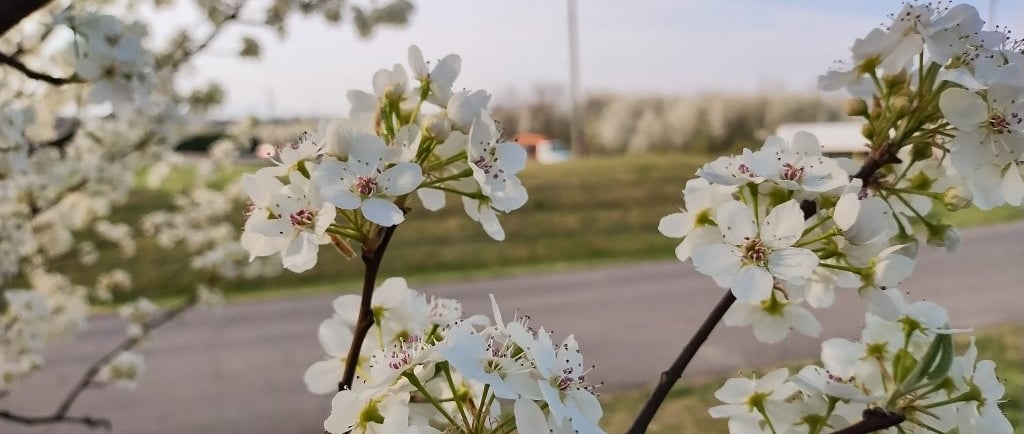
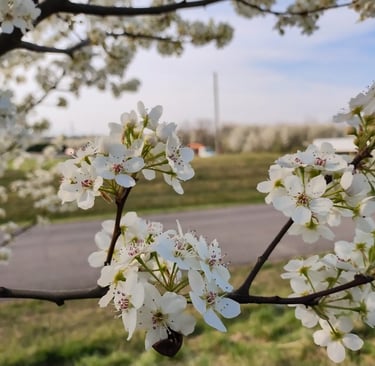
Bradford pears bloom early—often before the leaves even emerge. Entire subdivisions suddenly turn bright white almost overnight.
From a distance, it looks like spring has arrived.
From up close, it smells like a seafood market that lost power during a long weekend.
The flowers themselves are small and dense, packed into clusters. When dozens or hundreds of trees bloom together in a neighborhood, the scent compounds and spreads quickly.
That’s when people start asking questions.
Why Bradford Pears smell so bad
The unpleasant odor is not an accident. It’s a pollination strategy.
Bradford pear flowers produce compounds that attract insects—especially flies and beetles—that are drawn to scents associated with decay.
In other words, the smell is basically an insect advertisement.
Plants that rely on bees tend to smell sweet.
Plants that rely on flies often smell… questionable.
Bradford pears fall firmly into the second category.
Researchers have identified compounds in the blossoms that mimic odors insects associate with decomposing organic matter. It’s an evolutionary trick that works quite well in the wild, though it tends to be less appreciated in suburban cul-de-sacs.
Why It Feels Like the Smell Is Everywhere
Two reasons.
First, these trees were planted everywhere during the suburban development boom of the 1980s and 1990s. Developers loved them because they grew quickly and looked tidy when young.
Second, they tend to bloom all at once.
When hundreds of trees flower at the same time, the scent accumulates across entire neighborhoods. What might have been tolerable from a single tree becomes… memorable… when an entire subdivision participates.
The Smell Isn’t the Only Issue
The odor gets the headlines, but it’s actually the least serious of the Bradford pear’s problems.
Arborists and landscape professionals tend to worry more about:
weak branch structure
short lifespan
catastrophic storm breakage
invasive seedlings spreading into fields and forests
In other words, the smell is just the first clue that something about this tree isn’t quite right.
Other Plants That Smell Weird (Bradford Pear Isn’t Alone)
Bradford pears get most of the attention, but they’re not the only plants that use unusual scents.
A few other examples:
Ginkgo trees – female trees produce fruit that smells like rancid butter
Certain magnolias – faint fishy odor during bloom
Corpse flower – famously smells like rotting flesh
In other words, Bradford pears aren’t unique. They’re just far more common.
When a million trees decide to bloom at once, people notice.
Ten Creative Descriptions of Bradford Pear Smell
Over the years people have offered some memorable comparisons.
Among the more printable ones:
Rotten fish
A bait bucket in the sun
Wet gym socks
Old seafood
Something died in the bushes
A biology lab accident
The world’s worst air freshener
Springtime regret
A landscaping decision from 1995
“That smell”
If you know, you know.
The Bottom Line
Bradford pears look great for about ten days every spring.
After that, the bloom fades, the smell dissipates, and the trees return to their normal role in suburban landscapes—growing a little taller and quietly preparing for their next party trick, which is usually splitting in half during the next decent windstorm.
But for a brief moment each spring, they remind the entire neighborhood that horticultural decisions have consequences.
And sometimes those consequences smell.